
Have you ever wondered what the tritium symbol means and why it matters? Whether you’re curious about science, energy, or just want to understand this unique element better, knowing the tritium symbol can open up new insights for you.
This small symbol holds big secrets about atomic structure and even real-world applications that affect your daily life. Keep reading, and you’ll discover why the tritium symbol is more important than you might think—and how it connects to things around you in surprising ways.
Tritium Basics
Tritium is a special form of hydrogen. It plays an important role in science and technology. Understanding the basics of tritium helps us learn about its uses and properties.
This section explains what tritium is, its atomic structure, and how it occurs naturally.
What Is Tritium
Tritium is a rare type of hydrogen. It has one proton and two neutrons in its nucleus. This makes it heavier than normal hydrogen. Tritium is radioactive, meaning it slowly breaks down over time.
Atomic Structure
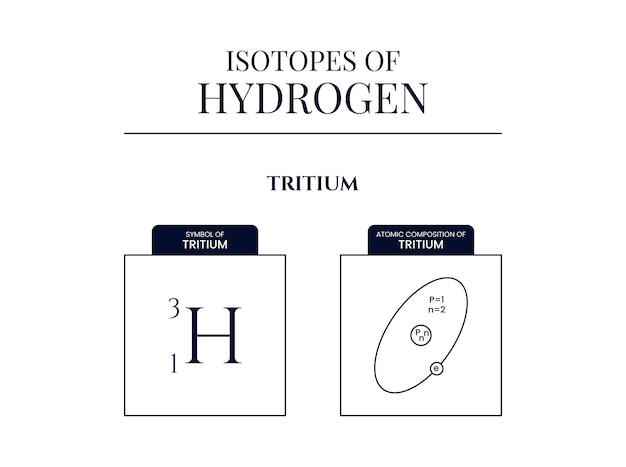
The atomic number of tritium is 1, like all hydrogen atoms. It has one proton and one electron. The difference is in its neutrons. Tritium has two neutrons, which gives it a mass number of 3. This structure makes it unique among hydrogen isotopes.
Natural Occurrence
Tritium forms naturally in the atmosphere. Cosmic rays hit nitrogen atoms and create tritium. It is found in very small amounts in water and air. Most tritium on Earth exists due to natural processes and human activities.
The Tritium Symbol
The tritium symbol is a key part of understanding this unique form of hydrogen. Tritium is a rare isotope. Its symbol helps scientists and students recognize it quickly. This section explains the chemical notation, isotope representation, and common abbreviations of tritium.
Chemical Notation
Tritium is a type of hydrogen. Its chemical notation is similar to regular hydrogen but with a small change. The symbol for hydrogen is H. For tritium, the symbol shows its mass number as a superscript. This makes it ³H. The number 3 means tritium has one proton and two neutrons.
Isotope Representation
Isotopes differ by the number of neutrons. Tritium has two neutrons, unlike normal hydrogen. Its isotope representation shows the atomic number as a subscript and mass number as a superscript. For tritium, it is written as ³₁H. The 1 is the atomic number, meaning one proton. This notation clearly shows tritium’s identity.
Common Abbreviations
Scientists often use short forms for tritium. The most common abbreviation is simply T. This letter stands for tritium in many contexts. Another abbreviation is ³H, which combines the mass number and the chemical symbol. These abbreviations make writing and reading easier in scientific texts.
Scientific Properties
Tritium is a unique form of hydrogen with special scientific properties. These properties make it important in science and industry. Understanding its behavior helps explain its uses and safety.
Radioactive Decay
Tritium undergoes radioactive decay, meaning it breaks down over time. It changes into helium-3 by releasing a beta particle. This process is slow and steady, making tritium a weak radioactive source.
Half-life Duration
The half-life of tritium is about 12.3 years. This means half of a tritium sample decays in this time. Knowing the half-life helps scientists predict how long tritium remains active.
Energy Emission
Tritium emits low-energy beta particles during decay. These particles cannot penetrate the skin deeply. This makes tritium safer to handle compared to other radioactive materials.

Applications Of Tritium
Tritium, a rare and radioactive form of hydrogen, has unique properties. These make it valuable in several important fields. Its applications impact energy, safety, and science. Below are some key areas where tritium plays a vital role.
Nuclear Fusion
Tritium is a fuel in nuclear fusion reactors. It combines with deuterium to release huge energy. This process mimics the sun’s power. Fusion promises clean and abundant energy. Tritium’s role is crucial in experimental reactors worldwide.
Self-luminous Devices
Tritium glows without needing electricity. It is used in watches, exit signs, and gun sights. This glow lasts for years. It helps people see in the dark safely. Tritium lights are reliable and low maintenance.
Environmental Tracing
Scientists use tritium to track water movement. It helps study groundwater and ocean currents. Tritium acts as a natural marker. This tracing improves understanding of water cycles. It supports environmental research and protection efforts.
Safety And Handling
Handling tritium requires care and knowledge about its risks. Safety is important to prevent harm and keep everyone safe. This section explains how to handle tritium properly and what rules to follow.
Radiation Risks
Tritium gives off low-energy beta radiation. This radiation cannot pass through skin. It becomes a risk only if tritium enters the body. Breathing, swallowing, or absorbing tritium can cause harm. Exposure may lead to damage in body tissues over time. Use protective gear and avoid direct contact to reduce risks.
Storage Guidelines
Store tritium in sealed, sturdy containers. Keep it away from heat and direct sunlight. Place containers in a cool, dry area with good ventilation. Label storage clearly to warn others. Limit access to trained personnel only. Regularly check containers for leaks or damage to prevent accidents.
Regulatory Standards
Governments set strict rules for using tritium. These rules control how much tritium can be handled and stored. Follow local and international safety standards at all times. Report any spills or accidents immediately. Training and certification may be required for handling tritium safely.

Future Of Tritium Research
The future of tritium research holds great promise for science and technology. Tritium, a rare hydrogen isotope, plays a key role in energy and medical fields. Scientists continue to explore its potential to improve our daily lives. Understanding and managing tritium better can lead to new discoveries and safer applications.
Advancements In Fusion Energy
Tritium is vital for fusion energy, a clean power source. Researchers develop ways to produce and use tritium efficiently. Fusion reactors rely on tritium to create energy by combining atoms. New methods aim to increase tritium availability and reduce waste. These efforts bring fusion energy closer to reality.
Innovative Uses
Beyond energy, tritium finds use in medicine and industry. It helps trace chemical processes and study biological systems. Tritium lighting provides long-lasting, self-powered illumination. Scientists explore new applications in environmental monitoring. Its unique properties open doors to many innovations.
Sustainability Challenges
Producing tritium requires careful handling to avoid harm. It is scarce and radioactive, needing safe storage solutions. Researchers seek methods to recycle and reduce tritium waste. Balancing use and environmental impact remains a major focus. Sustainable tritium use will support future technological growth.
Frequently Asked Questions
What Does The Tritium Symbol Represent?
The tritium symbol, ³H or T, represents a radioactive isotope of hydrogen. It has one proton and two neutrons.
How Is The Tritium Symbol Written In Chemistry?
In chemistry, tritium is written as ³H, indicating its atomic mass of three. The letter H stands for hydrogen.
Why Is Tritium Important In Scientific Research?
Tritium is crucial in nuclear fusion, radioluminescence, and tracing experiments. Its radioactive nature helps track chemical and biological processes.
Where Is The Tritium Symbol Commonly Used?
The tritium symbol is used in nuclear science, medical imaging, and environmental studies. It identifies tritium in formulas and labels.
Conclusion
The Tritium symbol plays a key role in science and technology. It helps us understand atomic structure and energy use. This small symbol tells a big story about hydrogen’s special form. Scientists and students find it useful every day. Knowing about Tritium can spark curiosity about the natural world.
Simple yet important, it connects many ideas in physics and chemistry. Keep this symbol in mind as you explore more science topics. It shows how tiny details can matter a lot.