
If you’ve ever wondered how tritium, a rare and valuable element, is made, you’re in the right place. Tritium production plays a crucial role in everything from nuclear energy to medical research and even glowing watch dials.
Understanding how this unique substance is created can unlock new insights into science and technology that directly impact your life. Keep reading, and you’ll discover the fascinating process behind tritium production and why it matters more than you might think.
Tritium Basics
Tritium is a rare form of hydrogen. It plays a key role in various scientific fields. Understanding tritium helps explain its use in energy and technology.
This section covers the basic properties of tritium. It also explores its role in modern energy systems.
Properties Of Tritium
Tritium is a radioactive isotope of hydrogen. It has one proton and two neutrons in its nucleus. This makes it heavier than normal hydrogen.
Tritium emits low-energy beta radiation. Its half-life is about 12.3 years. It slowly decays into helium-3 over time.
Tritium is rare in nature but can be produced artificially. It combines easily with oxygen to form tritiated water.
Role In Energy Systems
Tritium is important in nuclear fusion research. It serves as fuel in fusion reactors. Fusion aims to produce clean and abundant energy.
Tritium also appears in some nuclear weapons as a booster. It increases the efficiency of the explosion.
Energy systems using tritium require careful handling. Its radioactivity demands strict safety measures.
Current Production Methods
Tritium is a rare and valuable isotope. It has special uses in science and industry. Producing tritium requires careful methods. Scientists use different techniques to create it. These methods involve complex equipment and processes. Understanding current production methods helps to grasp how tritium is made today.
Nuclear Reactor Techniques
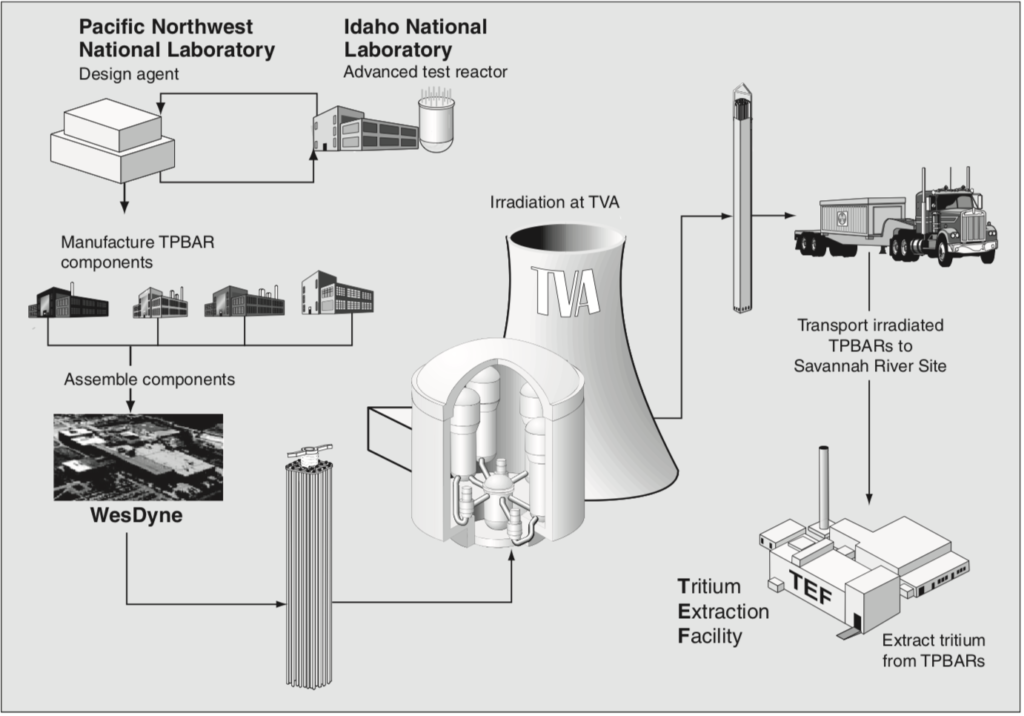
Nuclear reactors are the main source of tritium. They use neutron reactions to produce it. Lithium-6 is placed inside the reactor. Neutrons hit the lithium, making tritium. Heavy water reactors also produce tritium as a byproduct. This method is reliable and widely used. It needs strict safety controls due to radiation risks.
Particle Accelerator Approaches
Particle accelerators create tritium differently. They fire high-energy particles at targets. The collisions produce tritium atoms. This method allows precise control of production. It can make tritium without a nuclear reactor. Accelerators are expensive but useful for small-scale needs. They help in research and special applications.
Extraction Challenges
Extracting tritium is difficult and costly. Tritium is radioactive and decays quickly. It mixes with other gases, making separation hard. Special equipment captures and isolates tritium safely. Handling must prevent leaks and contamination. These challenges limit how much tritium can be produced. Careful storage is also essential to keep it stable.
Innovations In Tritium Generation
Innovations in tritium generation focus on safer, cleaner, and more efficient methods. Scientists work hard to improve how we produce tritium. These advances help support future energy needs, especially in fusion power.
Advanced Fusion Reactors
Advanced fusion reactors use new designs to create tritium inside the reactor. They mimic the sun’s energy process safely on Earth. These reactors can produce tritium while generating clean energy. This dual purpose makes them very valuable for energy and tritium supply.
Breeding Blanket Technologies
Breeding blankets surround fusion reactors to produce tritium. They contain materials that absorb neutrons and release tritium atoms. Scientists improve these blankets for better tritium production rates. Efficient blankets help keep the tritium supply steady and reliable.
Alternative Production Concepts
New ideas explore different ways to produce tritium outside traditional reactors. Some use particle accelerators or new chemical methods. These concepts aim to lower costs and reduce environmental impact. Alternative methods offer backup plans for tritium production.
Tritium In Fusion Energy
Tritium plays a key role in fusion energy, a clean power source. It is a rare and radioactive form of hydrogen. Fusion uses tritium and deuterium to create energy. This process mimics the sun’s way of producing power.
Tritium is essential for sustaining fusion reactions. Scientists study how to produce and manage tritium safely. Understanding tritium helps us move closer to practical fusion power plants.
Fuel Cycle Dynamics
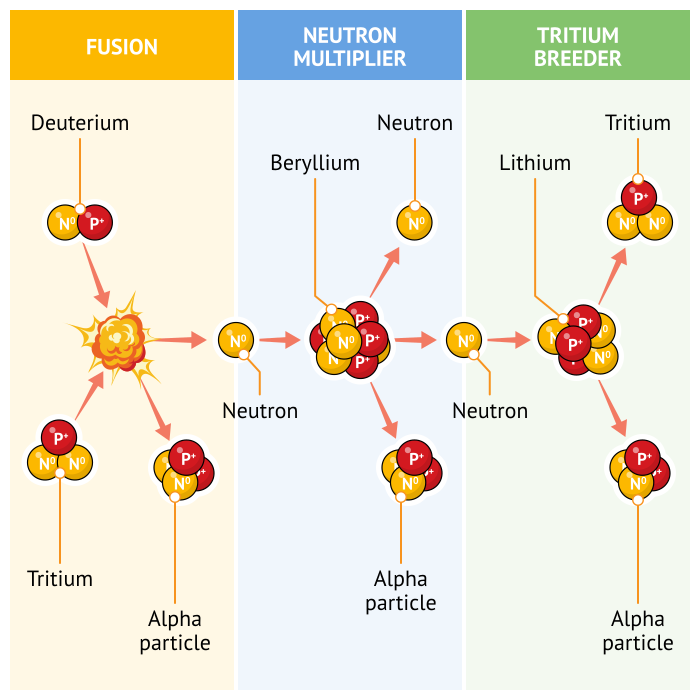
The fusion fuel cycle begins with tritium and deuterium. Tritium is scarce, so it must be bred inside the reactor. Lithium blankets around the reactor help create tritium. Neutrons from fusion hit lithium to produce more tritium. This cycle keeps the fusion process running continuously.
Managing the fuel cycle efficiently reduces waste and cost. It also ensures a steady tritium supply for long-term fusion operations.
Safety And Handling
Tritium is radioactive and must be handled with care. Special containers prevent leaks and contamination. Workers follow strict safety rules to avoid exposure. Tritium’s low energy radiation poses limited risk outside the body.
Fusion reactors have safety systems to contain tritium. Monitoring tools detect any tritium release quickly. Safe handling protects people and the environment.
Energy Output Potential
Fusion using tritium produces large amounts of energy. The reaction releases much more energy than chemical fuels. This energy comes from combining light atoms into heavier ones. Fusion energy is clean, producing no greenhouse gases.
Tritium fusion could power cities with minimal fuel. Its high energy density means small fuel amounts generate much power. This makes fusion a promising energy source for the future.
Environmental And Economic Impact
Tritium production impacts both the environment and the economy. Understanding these effects is key to responsible use and development. This section explores important factors related to sustainability, costs, and regulations.
Sustainability Considerations
Tritium is a rare and radioactive isotope. Its production involves nuclear reactions that can affect natural resources. Managing waste and emissions is essential to reduce harm. Some methods use less energy and create less waste. Choosing greener technologies supports long-term environmental health. Protecting ecosystems near production sites prevents damage to plants and animals.
Cost Analysis
Producing tritium requires specialized equipment and materials. These needs often make production expensive. Operational costs include energy, safety measures, and waste handling. Balancing costs with benefits is crucial for industries using tritium. Advancements in technology may lower future expenses. Efficient production methods help reduce overall financial impact.
Regulatory Landscape
Governments set strict rules for tritium production and use. These rules protect workers, communities, and the environment. Compliance involves regular inspections and reporting. Licensing ensures that facilities meet safety standards. Regulations vary by country but share common goals. Staying updated on laws avoids legal issues and fines.
Future Prospects
The future of tritium production holds many opportunities and challenges. As demand grows, the need to produce tritium more efficiently becomes critical. Advances in technology and stronger partnerships around the world will shape this future. The following sections explore key aspects that will influence tritium production in the coming years.
Scaling Production
Increasing tritium production requires expanding current facilities and building new ones. Plants must handle higher volumes safely and reliably. Efficient use of resources will reduce costs and waste. Scaling also means training more skilled workers and improving supply chains. Meeting global demand depends on steady growth in production capacity.
Technological Barriers
Producing tritium faces technical challenges. Handling radioactive materials needs strict safety measures. New methods must improve yield without raising risks. Developing better extraction and recycling technologies is vital. Innovation in monitoring and control systems will help overcome these barriers.
Global Collaboration
Countries must work together to share knowledge and resources. Cooperation helps spread best practices and reduce duplication. Joint projects can lower costs and speed progress. International standards can ensure safety and quality. Global teamwork strengthens the overall tritium supply chain.
Frequently Asked Questions
What Is Tritium Production Used For?
Tritium production is crucial for nuclear fusion, medical imaging, and self-powered lighting. It supports energy research and military applications. Tritium’s radioactive properties enable its use in these specialized fields, making it valuable for scientific and industrial purposes.
How Is Tritium Produced Commercially?
Commercial tritium is mainly produced in nuclear reactors by irradiating lithium or heavy water. This process generates tritium atoms through neutron capture. It ensures a steady supply for various applications, including fusion energy and defense technologies.
Why Is Tritium Important In Fusion Energy?
Tritium acts as a key fuel in nuclear fusion reactions. It combines with deuterium to release massive energy. This makes it essential for advancing clean and sustainable fusion power generation.
What Are The Challenges In Tritium Production?
Tritium production faces challenges like high cost, limited sources, and radioactive handling risks. Efficient extraction and safety protocols are critical. These factors impact supply and operational feasibility.
Conclusion
Tritium production plays a vital role in many industries today. It supports energy, science, and technology development worldwide. Understanding how tritium is made helps us see its value clearly. As demand grows, safe and efficient methods become more important. Keeping these processes clean protects both people and the planet.
Tritium’s future depends on smart choices and careful work. This small element holds big potential for tomorrow’s innovations.